The Hollywood production ecosystem is reeling as Quixote Studios confirms the layoff of 70 employees and the effective wind-down of most of its sound stage operations. Once a cornerstone of Los Angeles-based film and television production, Quixote’s move reflects a seismic shift in how content is made—and where. This isn’t just a studio downsizing; it’s a symbol of Hollywood’s structural unraveling in the face of streaming cutbacks, runaway production, and evolving studio economics.
The studio, historically anchored at the iconic Sunset Gower Studios lot, has long hosted major network shows, streaming series, and independent films. But shifting priorities in content spending, combined with a saturated sound stage market, have forced Quixote to retreat from its core business. The decision leaves hundreds of crew members, contractors, and affiliated vendors grappling with uncertainty—and adds to a growing list of warning signs for Southern California’s entertainment economy.
Inside Quixote’s Strategic Retreat
Quixote Studios didn’t collapse overnight. Its pivot away from sound stage operations has been months in the making, signaled by dwindling bookings, expiring leases, and internal restructuring. Sources familiar with the studio’s operations reveal that occupancy rates at its Los Angeles facilities dipped below 40% in early 2024—unsustainable for a business built on high fixed costs and union labor commitments.
The 70 layoffs span technical, administrative, and operations roles. While some talent and executive staff remain to manage residual leases and digital ventures, the core production infrastructure is being dismantled. Stages once occupied by multi-camera sitcoms and hour-long dramas now sit idle, with equipment being mothballed or sold off.
This isn’t a bankruptcy. It’s a recalibration—one born from necessity. Quixote is shifting focus toward virtual production services, content incubation, and real estate partnerships. But the pivot comes at a cost: the loss of hundreds of middle-class jobs that have supported families across the San Fernando Valley and Hollywood Hills for decades.
Why Sound Stages Are No Longer Sacred Ground For generations, Hollywood’s identity has been tied to physical production. Sound stages were temples of creativity—where scripts became images, and actors became icons. But that model is eroding.
Three key factors are driving the decline:
- Streaming Overcorrection
- After years of explosive growth, platforms like Netflix, Amazon, and Apple have pulled back on spending. High-budget series that once guaranteed long-term stage bookings are being canceled or scaled down. The “golden age of TV” has given way to cost-conscious greenlighting.
- Runaway Production
- Tax incentives in Georgia, New Mexico, the UK, and Canada have pulled productions away from California. A drama that once would have shot in Los Angeles may now be filmed in Toronto or Budapest—where subsidies cover 25–35% of qualified spend.
- Oversupply Meets Underdemand
- The construction boom of new studio spaces—from Warner Bros. Discovery’s expansion in Burbank to Netflix’s Albuquerque hub—has flooded the market. Meanwhile, the volume of new productions has plateaued. The result? A buyer’s market for stages, with studios competing for fewer tenants.
Quixote was caught in this perfect storm. Unlike vertically integrated giants (Disney, Warner Bros.), it lacked a pipeline of in-house content to backfill bookings. As external demand waned, revenue followed.
The Ripple Effect on Hollywood’s Workforce

Layoffs at a studio like Quixote don’t just affect employees on the payroll. They ripple across the entire production ecosystem.
Consider a single sound stage: - It employs electricians, grips, carpenters, and HVAC technicians. - It contracts with caterers, security firms, and sanitation services. - It supports transportation coordinators, set decorators, and prop masters.
When one stage goes dark, dozens of independent contractors lose work. When multiple stages sit idle—as they now do at Quixote—the regional economy contracts.
Union leaders at IATSE and Teamsters have voiced alarm. “These aren’t just jobs,” said a local business representative. “These are careers. These are pensions. When a studio like Quixote pulls back, it doesn’t just cut costs—it cuts community.”
The 70 direct layoffs may balloon into hundreds of indirect job losses across the supply chain. And with no clear rebound in sight, many freelancers are considering career shifts—into construction, tech, or trades with more stability.
Comparing Quixote’s Fate to Other Studio Shifts
Quixote isn’t alone. Other studios are also reevaluating their physical footprint:
| Studio | Action Taken | Reason |
|---|---|---|
| Sony Pictures | Converted backlot into mixed-use development | Real estate pressure, declining stage demand |
| Universal Studios | Slowed new construction, renegotiated leases | Streaming uncertainty |
| NEP Studios | Sold LA facility, shifted to mobile units | Demand for on-location virtual production |
| The Third Floor | Expanded previs, reduced stage rentals | Rise of virtual scouting tools |
While these moves vary in scale, the trend is consistent: reliance on traditional sound stages is decreasing. Studios are prioritizing flexibility, scalability, and digital workflows over fixed infrastructure.
Quixote’s decision, then, is less an outlier and more a case study in adaptation. But the human cost remains steep.
The Rise of Virtual and Hybrid Production
Quixote is betting on a new model: virtual production and digital collaboration spaces. The studio has invested in LED volume technology and cloud-based pipeline tools that allow remote pre-visualization, real-time rendering, and distributed post workflows.
For example: - A director in London can review a virtual set rendered in real time from a Quixote-powered volume in LA. - Writers’ rooms collaborate on 3D environments before physical sets are built. - Indie filmmakers access scaled-down virtual stages on a pay-per-use model.
These services reduce the need for long-term stage leases and large on-site crews. They also open global markets—where Quixote can compete without owning square footage.
But there’s a catch: virtual production doesn’t employ nearly as many people. One LED volume technician may replace five traditional set builders. The efficiency gains come at the expense of labor demand.
Real Estate and the Future of Studio Lots
Behind the scenes, real estate is a major driver of Quixote’s wind-down. The Sunset Gower lot, like many historic studio spaces, sits on land now worth far more as development property than as production space.
In recent years: - CBS sold its Studio City lot for mixed-use redevelopment. - Disney offloaded non-core properties in Glendale. - Legendary Entertainment explored leasing out portions of its Burbank campus.
Quixote’s parent company, Hudson Pacific Properties, owns the underlying real estate. As studio revenue declines, the incentive to repurpose land for housing, offices, or retail grows.
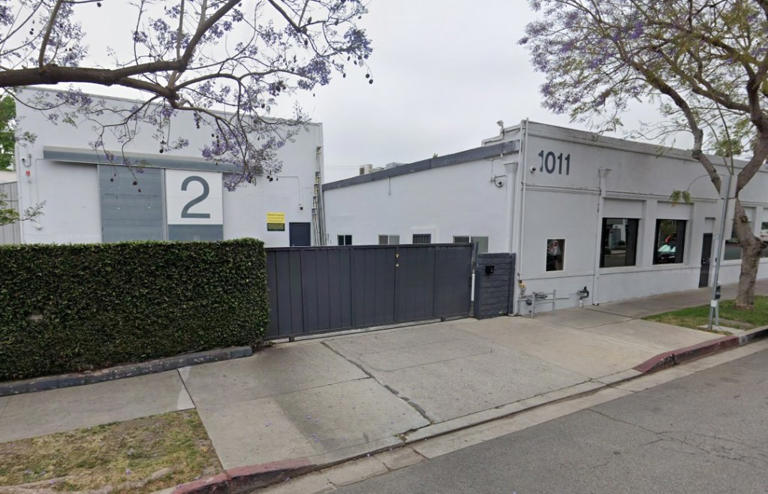
This raises a troubling question: Will Hollywood eventually lose the physical infrastructure that made it a production capital? If studios continue converting lots into condos or tech campuses, where will the next generation of filmmakers work?
What This Means for Independent and Mid-Sized Productions
Independent producers and mid-budget creators are feeling the squeeze. With fewer available stages in Los Angeles—and higher rates at remaining ones—they’re forced to make tough choices:
- Relocate to incentive-rich states, increasing travel and logistics costs.
- Shoot on location, sacrificing sound and lighting control.
- Downsize productions, cutting crew or days to fit tighter budgets.
One indie director shared: “We used to book Quixote for $25K a week. Now the same stage elsewhere costs $38K, and I have to fly in half my crew. It’s not sustainable.”
Streaming platforms, once seen as a lifeline for diverse content, have become more risk-averse. Algorithms favor proven IP and global audiences—leaving little room for original, location-specific stories that benefit from LA’s creative ecosystem.
The Path Forward: Adaptation, Not Collapse
Quixote’s story isn’t one of failure—it’s one of forced evolution. The studio is attempting to survive by shedding outdated infrastructure and embracing digital-first models. But its struggle underscores a broader truth: Hollywood’s golden era of stable, localized production may be over.
To thrive, the industry must: - Invest in hybrid workflows that blend physical and virtual production. - Reform labor models to support freelancers during industry transitions. - Advocate for stronger state incentives to keep production in California. - Repurpose studio spaces without losing their creative function.
Quixote may no longer be a major player in sound stages, but its legacy—and its lessons—will shape the next chapter of entertainment.
Closing: A Call for Strategic Reinvention
The layoff of 70 staff at Quixote Studios is more than a corporate restructuring. It’s a warning flare for an industry in transition. To avoid further erosion, studios must move beyond cost-cutting and embrace structural reinvention—balancing real estate strategy, workforce sustainability, and creative access. The future of Hollywood won’t be built on stages alone, but on smarter, more resilient systems that value both innovation and people.
FAQ
Why is Quixote Studios laying off staff? Quixote is reducing its workforce due to declining demand for sound stage rentals, driven by streaming cutbacks, runaway production to other states, and oversupply in the studio market.
How many employees were affected by the layoffs? Approximately 70 employees were laid off as part of Quixote’s wind-down of most of its sound stage operations.
Will Quixote Studios close completely? No. While it’s stepping back from physical production, Quixote is shifting toward virtual production services, digital collaboration platforms, and real estate ventures.
What impact do these layoffs have on Hollywood? The layoffs signal deeper instability in LA’s production economy, affecting not just Quixote workers but also contractors, vendors, and local businesses dependent on studio activity.
Are other studios facing similar challenges? Yes. Sony, Universal, and independent studio operators are also scaling back or repurposing facilities due to reduced production volume and rising operational costs.
What is “runaway production” and how does it affect LA? Runaway production refers to filming moving out of California to locations offering tax incentives. This reduces local job opportunities and weakens the regional production pipeline.
Can virtual production replace traditional sound stages? Virtual production offers new efficiencies but employs fewer people and can’t fully replicate the needs of all genres—particularly large-scale practical effects or multi-camera shoots.
FAQ
What should you look for in Quixote Studios Lays Off 70, Winds Down Hollywood Sound Stages? Focus on relevance, practical value, and how well the solution matches real user intent.
Is Quixote Studios Lays Off 70, Winds Down Hollywood Sound Stages suitable for beginners? That depends on the workflow, but a clear step-by-step approach usually makes it easier to start.
How do you compare options around Quixote Studios Lays Off 70, Winds Down Hollywood Sound Stages? Compare features, trust signals, limitations, pricing, and ease of implementation.
What mistakes should you avoid? Avoid generic choices, weak validation, and decisions based only on marketing claims.
What is the next best step? Shortlist the most relevant options, validate them quickly, and refine from real-world results.